Online Rummy Game: A Practical Guide to Rules, Tables, and Smart Play
Rummy has been a household card game for generations, and its digital version has made the experience faster, more accessible, and easier to learn. An Online Rummy Game brings the familiar draw-and-discard rhythm to your phone or tablet, letting you play a quick hand during a commute or a longer session on a quiet evening. Whether you are a complete beginner or someone who has played with physical cards for years, understanding how the online version works will help you enjoy it more and avoid common mistakes.
This guide walks through the essentials: how the game is structured, which variants you are likely to encounter, what the interface actually shows you, and the habits that separate casual players from consistent ones. It focuses on the game itself — the rules, the table flow, and the strategy — rather than on any external factors.
What Makes the Online Version Different
The core rules of rummy do not change when you move to a screen. You still receive a set of cards, you still draw and discard, and you still aim to arrange your hand into valid combinations before your opponents do. What changes is everything around the rules.
In a physical game, you shuffle, deal, and keep score yourself. Online, the platform handles all of that instantly. Cards are dealt in seconds, the discard pile is always visible, and the score is calculated automatically at the end of each hand. This removes a surprising amount of friction and lets you focus entirely on decisions.
The other major difference is pace. A physical game with four people might take an hour to complete several hands. An online table can move through the same number of hands in a fraction of that time because there is no shuffling, no dealing, and no manual scoring. If you enjoy the thinking part of rummy more than the logistics, the digital format is a clear improvement.
There is also the question of variety. Most platforms offer multiple rummy variants side by side, so you can switch between them without learning a new app or finding a new group of players. That flexibility is one of the strongest arguments for playing online.
The Basic Rules You Need to Know
Before you sit down at any table, make sure you understand the fundamentals. These apply across nearly every variant, even when the details differ.
The deal. Each player receives a set number of cards — commonly thirteen in the standard variant, though some formats use fewer. One card is placed face up to start the discard pile, and the remaining cards form the closed deck.
The turn. On your turn, you draw one card, either from the closed deck or from the discard pile. You then discard one card to end your turn. Your hand size stays constant throughout the game.
The goal. You want to arrange your cards into valid combinations. There are two main types:
- Sets: three or four cards of the same rank but different suits, such as the 7 of hearts, 7 of clubs, and 7 of spades.
- Runs: three or more consecutive cards of the same suit, such as the 4, 5, and 6 of diamonds.
Declaring. When your hand is fully arranged into valid combinations, you declare. If your declaration is correct, you win the hand. If it is not, you typically incur a penalty. This is why experienced players double-check their combinations before declaring.
Jokers. Most variants include joker cards that can substitute for any card you need. A printed joker is part of the deck, while a wild joker is a card randomly selected at the start of the hand. Jokers are powerful, but relying on them too heavily can leave you stuck when they do not appear.
Popular Rummy Variants Explained
One of the pleasures of playing online is that you can try several variants without changing apps. Here are the ones you are most likely to see.
Points Rummy
This is the fastest format. Each hand is played independently, and the winner receives points based on the value of the cards left in opponents’ hands. It is ideal for short sessions and for players who want quick feedback on their decisions.
Pool Rummy
In pool rummy, players start with a fixed number of points, and the goal is to avoid being eliminated. Each hand deducts points from the loser, and the last player standing wins. This format rewards consistency over a single lucky hand.
Deals Rummy
Deals rummy is played over a fixed number of hands. Points are accumulated across all hands, and the player with the lowest total at the end wins. It sits between points and pool rummy in terms of length and strategy.
Other Variations
Many platforms also offer variants with different card counts, additional joker rules, or modified scoring. If you are new to a variant, read the rules screen before your first hand — it usually takes less than a minute and prevents avoidable mistakes.
Reading the Table Interface
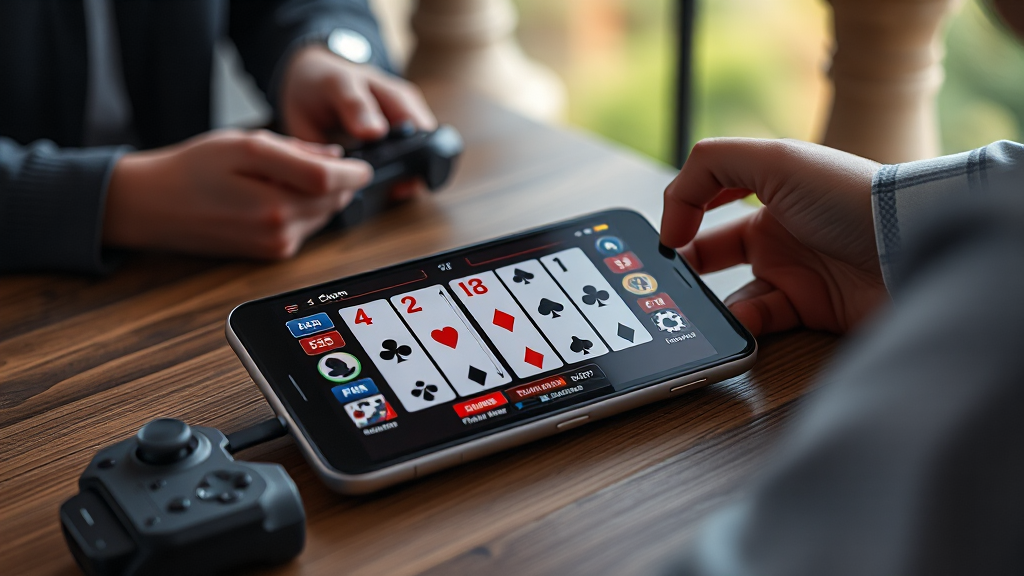
The interface of an online rummy game is designed to give you all the information you need at a glance. Understanding what each element means will make you a faster and more confident player.
The closed deck shows how many cards remain. As the deck shrinks, the probability of drawing a specific card changes, and experienced players pay attention to this.
The discard pile is your window into what opponents are doing. If a player discards a card you need, they are either not collecting that suit or they have already completed it. Either way, the information is useful.
Your hand is displayed at the bottom of the screen, usually sorted automatically. You can rearrange it to group potential combinations, which makes it easier to see what you are missing.
The timer shows how long you have to act. Most platforms give generous time, but playing quickly keeps the game enjoyable for everyone.
The score panel tracks points across hands. In points rummy it resets each hand; in pool and deals formats it accumulates.
Strategy That Actually Helps
Rummy is a game of incomplete information, which means strategy matters more than luck over the long run. These principles apply to almost every variant.
Build runs first. Runs are generally easier to complete than sets because you have more cards that can extend them. A run of three can become a run of four or five with a single draw, while a set of three needs a specific rank you may not see.
Keep your options open. Early in a hand, avoid committing to a single combination. Hold cards that could fit into multiple arrangements until the picture becomes clearer.
Watch the discard pile. If a card you need has already been discarded, it is gone. Adjust your plan accordingly rather than waiting for a card that cannot appear.
Discard high-value cards early. In points-based formats, cards like kings, queens, and aces carry higher penalties if you lose. If they do not fit your combinations, get rid of them before the hand ends.
Do not hoard jokers. A joker in your hand is useful, but a joker that completes a combination is better. Use them when they help you declare, not just because they are rare.
Declare carefully. A wrong declaration is costly. Take the extra second to verify that every card in your hand belongs to a valid combination.
Common Mistakes New Players Make
Most beginners lose hands for the same handful of reasons. Fixing these will improve your results quickly.
The first mistake is discarding too quickly. New players often discard the first card that seems useless without considering whether it could complete a run later. Slow down slightly and think one step ahead.
The second is ignoring the opponent’s discards. The discard pile is not just a place for unwanted cards; it is a record of what has been played. Reading it gives you an advantage.
The third is overvaluing jokers. Jokers are helpful, but they are not a strategy on their own. A hand built entirely around jokers is fragile.
The fourth is declaring too early. If you declare with an invalid hand, you lose points and momentum. Patience is usually rewarded.
Choosing Where to Play
If you are looking for a place to start, it helps to use a site that explains the game clearly before you commit time to it. AA Games Preview provides preview notes, version details, and feature summaries for Android game listings, which can help you understand what a platform offers before you download it. That kind of context is useful when you are comparing options and want to know what to expect from the interface and rules.
When evaluating any platform, look for clear rules documentation, a readable interface, and a straightforward scoring system. A well-designed table makes the game easier to learn and more enjoyable to play.
Practice, Patience, and Progress
Like any card game, rummy rewards repetition. The more hands you play, the more patterns you recognize and the faster your decisions become. Beginners often improve dramatically in their first few dozen hands simply by getting comfortable with the flow of draw, arrange, discard.
It also helps to review your losses. When you lose a hand, ask yourself whether you made a mistake or simply did not get the cards you needed. Over time, you will notice that good decisions produce better results even when individual hands go badly.
The online format makes this learning process easier because everything is visible and recorded. You can see exactly what you discarded, what you drew, and how the hand unfolded. That feedback loop is difficult to replicate with physical cards.
FAQ
Is online rummy difficult to learn?
No. The basic rules take only a few minutes to understand, and most platforms include a tutorial or practice table. The strategy takes longer to master, but you can start playing almost immediately.
What is the difference between a set and a run?
A set is three or four cards of the same rank in different suits. A run is three or more consecutive cards of the same suit. Both are valid combinations, and most hands use a mix of the two.
How do jokers work in online rummy?
Jokers substitute for any card you need to complete a combination. A printed joker is part of the deck, while a wild joker is a card selected at random at the start of the hand. Using them wisely is a key skill.
Can I play rummy on a phone?
Yes. Most online rummy platforms are designed for mobile devices, with touch-friendly interfaces and responsive layouts. A stable internet connection is the main requirement.
How long does a typical hand take?
In points rummy, a hand usually takes two to five minutes. Pool and deals formats run longer because they span multiple hands, but each individual hand remains quick.
What should I focus on as a beginner?
Focus on learning the combinations, watching the discard pile, and avoiding wrong declarations. Once those become automatic, you can start thinking more about long-term strategy and variant-specific tactics.